Track mileage automatically
Get started.svg)
ATO Vehicle Log Book Template
If you claim vehicle expenses for business purposes or receive reimbursement from your employer, you must keep proper records for your claim to be approved. These records are often in the form of a vehicle log book, also known as a car log book.
Download the Free Log Book Template as an Excel, Google Sheets, or PDF

Use the buttons above to select the version of the template you want, and follow the onscreen instructions to make a copy of the log book template.
The Excel and Sheets versions include a vehicle log example in another tab so you can see how to fill out your vehicle log book, plus an empty sheet you can use for your own log.
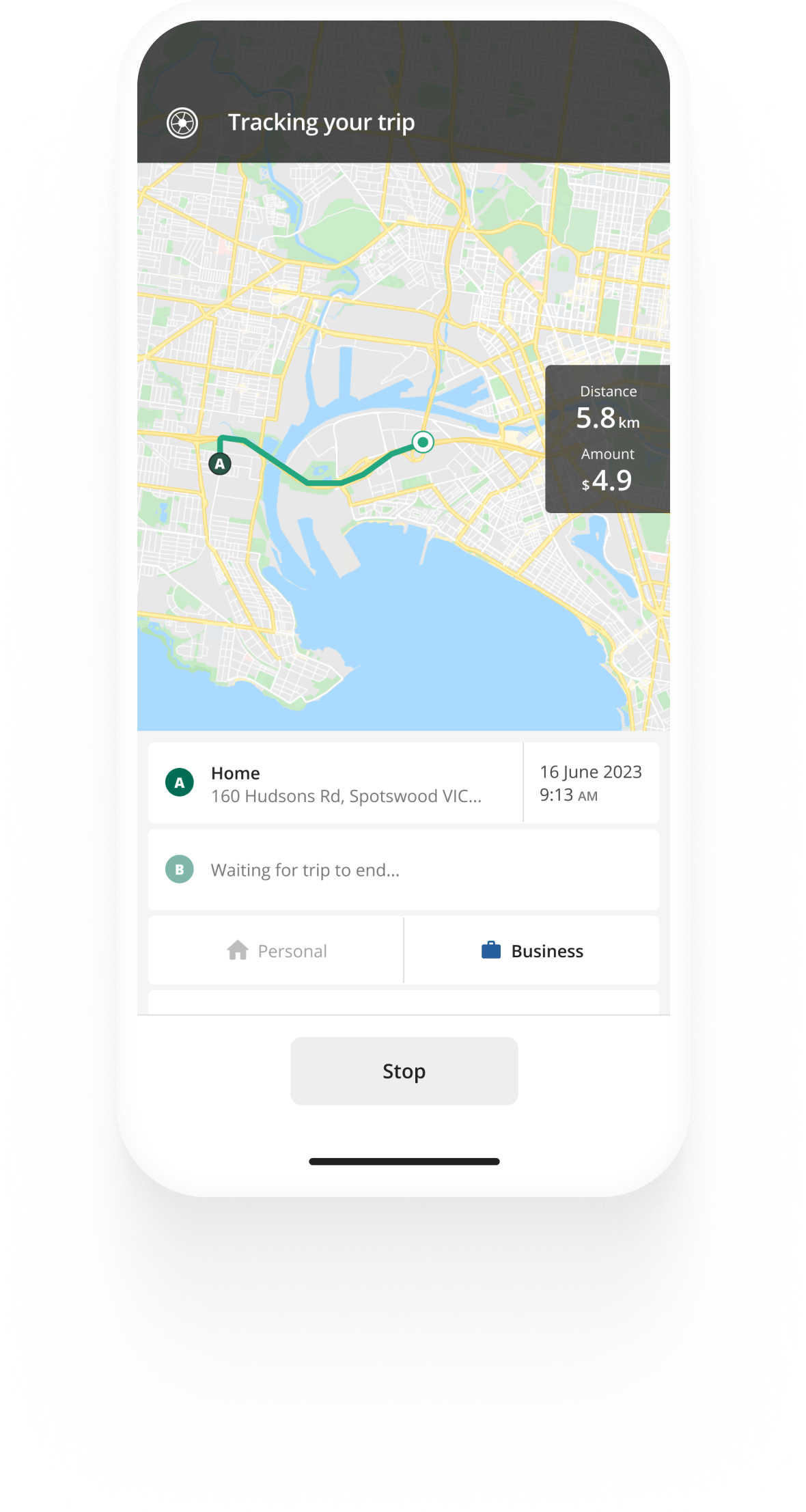
If you drive a lot for work, manually adding trips can be time-consuming. Consider using an automatic business km tracker app to save time and make sure all your business kilometres are logged. Driversnote does this automatically, tracking trips in the background and generating ATO-compliant reports.

Kilometre tracking made easy
Trusted by millions of drivers
Automate your logbook Automate your logbook
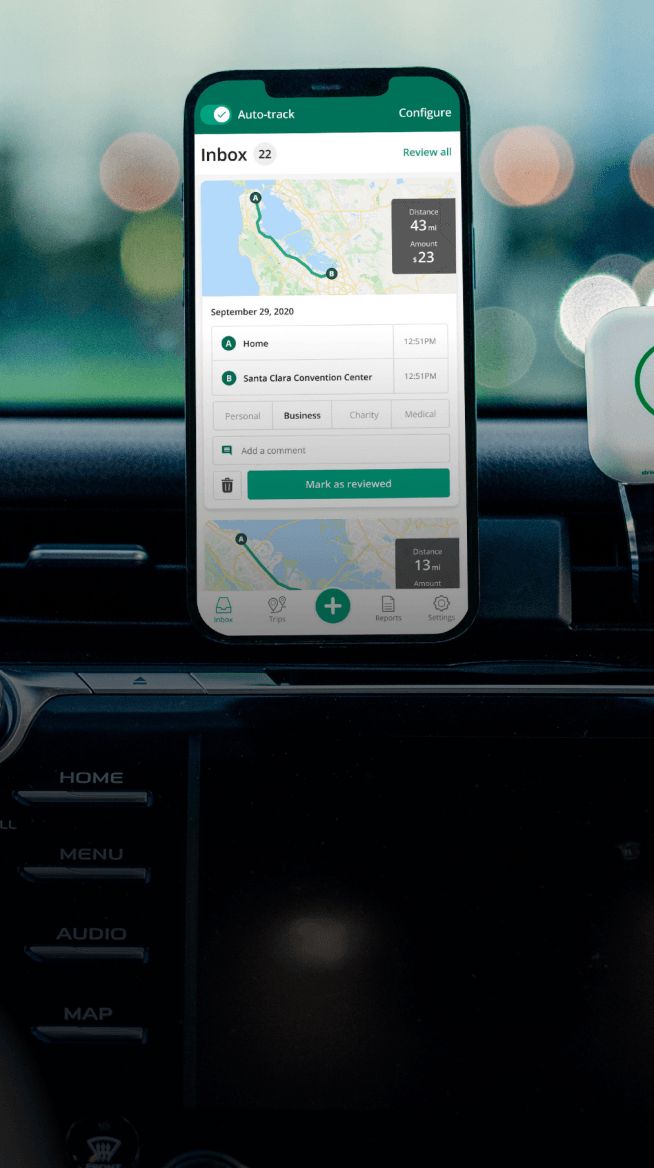
Automatic mileage tracking and ATO-compliant reporting.
Get started for free Get started for freeWhat to record in your log book template
For the logbook method
The ATO outlines clear rules for what information you must fill out in the log book template.
You must log the following details for the overall log book period:
- the period the log book covers
- the vehicle's odometer readings at the start and end of the log book period
- the total number of kilometres you've driven
- the percentage of business-related kilometres you've travelled
- the car make, model, engine size and registration number
For each individual trip, record:
- start and end times
- odometer readings
- distance travelled
- the reason for the trip
Important: Your log book must cover a continuous 12-week period that is representative of your typical driving throughout the year. Once complete, the same log book is valid for up to five years, so you don't need to repeat the process every tax year. Keep your log book and all related records for five years from the date you lodge your tax return, as the ATO can request them during an audit.
With the logbook method, you deduct your car expenses based on the percentage of business driving you recorded during your 12-week period. Claimable expenses include fuel, maintenance, repairs, registration, interest on a motor vehicle loan, lease payments, insurance cover premiums, and depreciation. Keep all receipts for those expenses throughout the year, as they support your claims to the ATO.
Read more about the ATO logbook method and how to claim business km with it.
The cents per km method
If you claim business km deductions using the cents per km method, the ATO doesn't require you to keep a vehicle log book. However, the ATO may ask you to show how you've calculated the business kilometres you're claiming. With this in mind, keeping a car log book and recording all your business trips, the reason for each, and the date and distance is good practice.
See how to claim business kilometres using the ATO cents per km method.
How to use the ATO vehicle log book template
Recording your trips in the Excel or Sheets templates will calculate your reimbursement according to the official ATO cents per km rate. For 2025/2026, the cents per km rate is $0.88.
If you want to use the logbook method for your business km claim, remove the Reimbursement column.
Note that if you print out any of the templates, you will need to calculate your reimbursement independently.
For example:
You drive your vehicle for business and receive reimbursement at the ATO cents per km rate. You have driven 1,300 kilometres for work at $0.88 per km. To calculate your reimbursement:
1,300 km x $0.88 = $1,144
Alternatively, you can also use our ATO cents per kilometre calculator.
FAQ
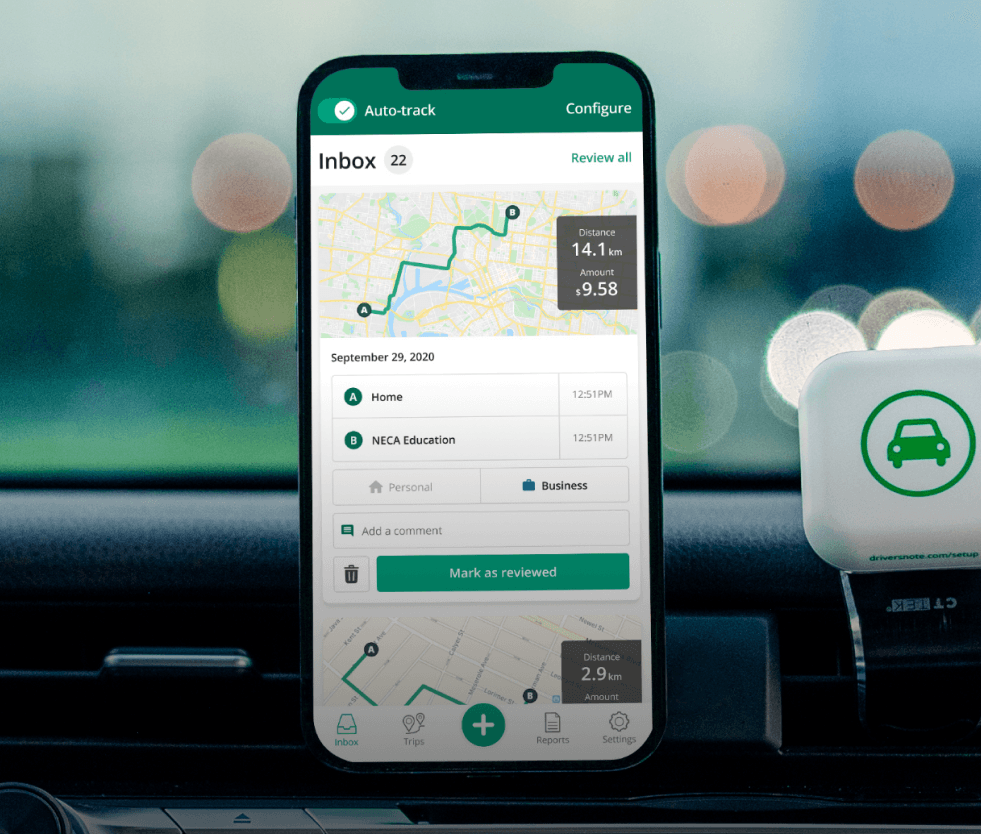
Tired of logging mileage by hand?
Effortless. ATO-compliant. Liberating.
Top posts
- How to Write Off a Car for Business in Australia
- How To Keep a Car Log Book
- Sole Trader Tax Deductions: An Essential Guide
Related posts

ATO Mileage Guide
Latest update: 23 June 2025 - 5 min read
Learn about the rules of reimbursing employees for their car expenses or deducting expenses as an employee or self-employed individual.
.svg)
How to Write Off a Car for Business in Australia
Latest update: 19 March 2026 - 5 min read
Claim a car tax write-off in Australia? Learn the ATO car limit, instant asset write-off rules, and which method gives you the biggest deduction in 2025/26.
How To Keep a Car Log Book
Latest update: 10 March 2026 - 5 min read
Find ATO's requirements for keeping compliant log books of your business driving for the logbook or the cents per km method.